Fast Facts
In the Past
North Africa is believed to be the original home of the hearty root vegetable we know as the beet. Both the leaves and the root were consumed by the Romans. Eventually white beets were developed and grown as livestock feed, and red sugar beets were grown for processing into sugar and alcohol.
In the Soil
The root of the beet is quite round, and supports broad leaves that extend vertically on long, typically red, stalks.
In the Kitchen
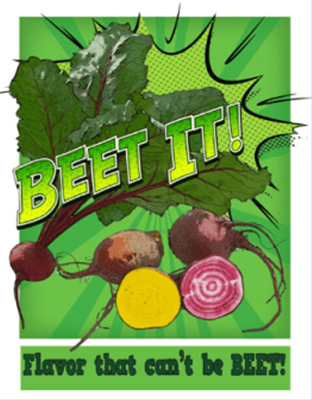
Beets are one of the more hearty root vegetables, with a distinct earthy taste. They are often dark red, though there are gold and yellow varieties and one red/white striped version called Chioggia. Beets are quite versatile; they can be roasted along with other root vegetables, added to soups or stews, shredded raw into salads, fermented as pickled beets, or juiced. The green tops are also edible, baby greens can be added to a salad, and larger greens can be sautéed. Because of their strong color, beets make an excellent natural dye for art projects.
In the Body
Beets are a great source of vitamins A, C, and riboflavin, as well as minerals potassium, magnesium iron and copper. They are thought to support digestion and stimulate the appetite.
In Connecticut
Beets grown in Connecticut are generally available July through mid-October, though proper storage may extend availability.
Recipe
These recipes were contributed by Connecticut Food Service Directors. They have been tested in schools and are a great way to feature beets in a new way. (Recipe and Meal Contribution Review completed by UConn Extension's Farm to School program. SFAs must check the crediting information for accuracy prior to including the item in reimbursable meals.)
If you have a recipe using this product that was successful in schools and would like to share please send it to us!
Food Service Recipes from other organizations looking to increase local procurement in schools: